Decoding pain and opioid addiction. Transforming treatment.
The Scherrer Lab investigates how cells and molecules within neural circuits generate pain perception and pain-related suffering, as well as the pain-relieving and adverse effects of opioids, including tolerance, addiction, and respiratory depression.
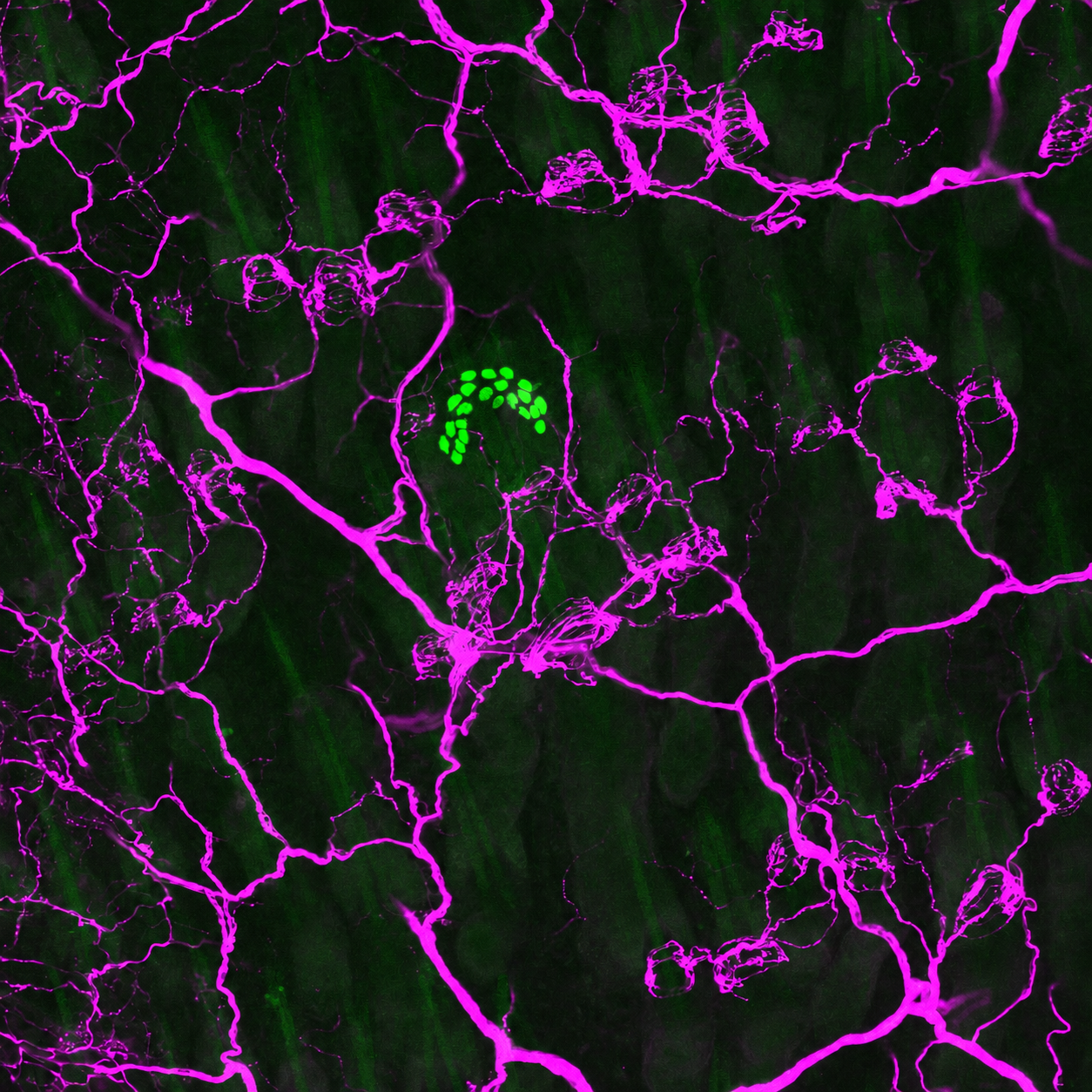
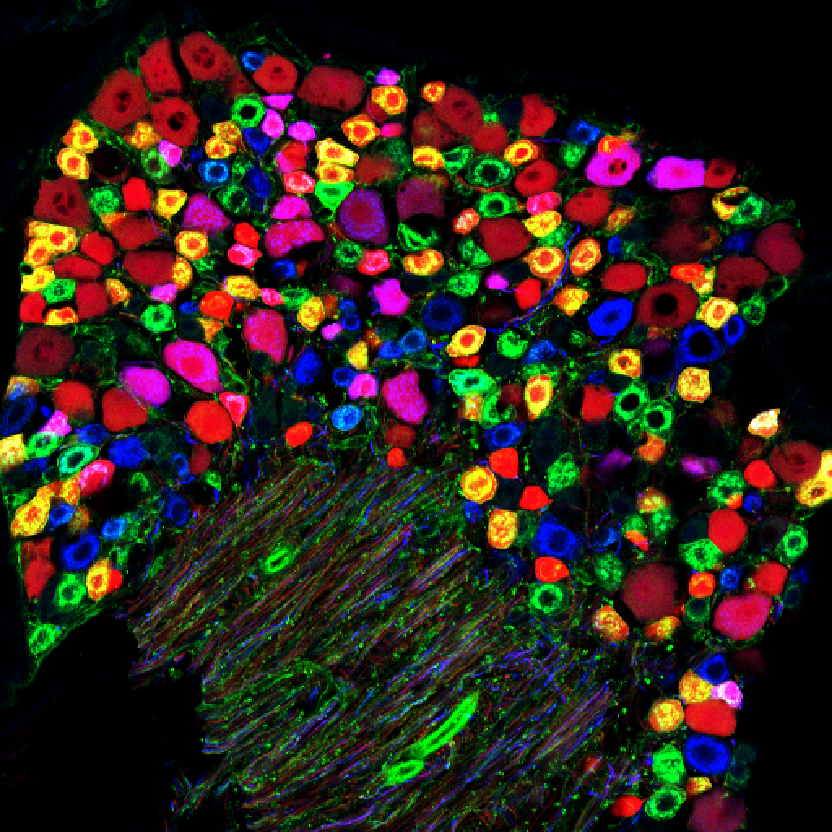
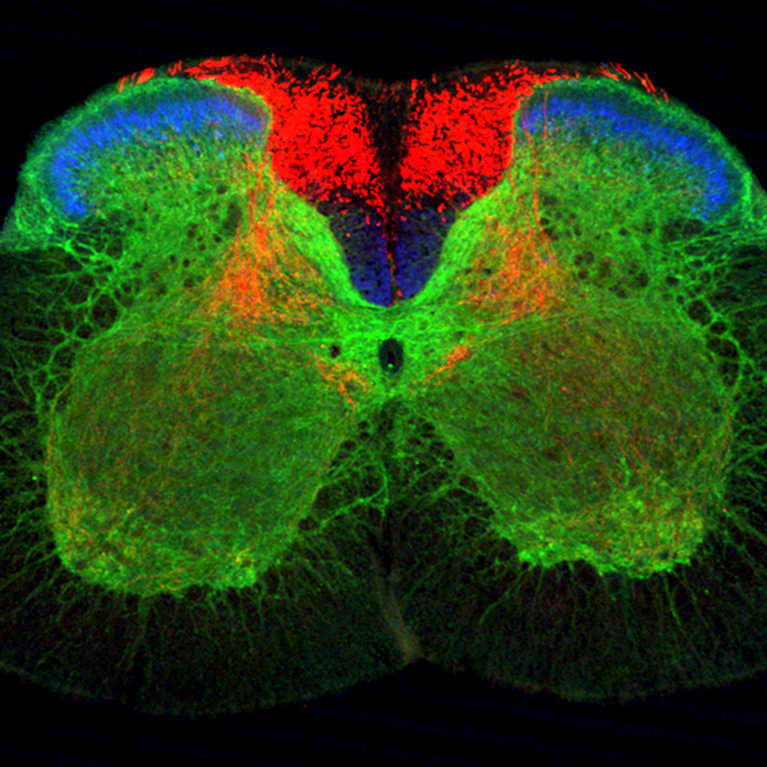
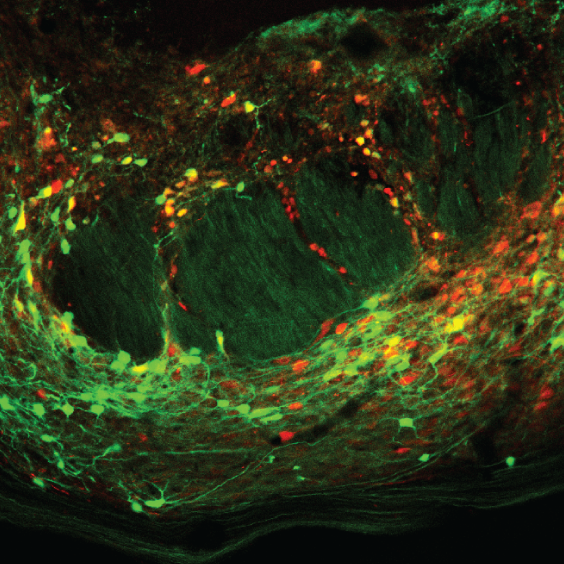
Our research spans the entire pain pathway—from sensory neurons in peripheral tissues and spinal circuits that process signals from the body to brain networks that construct the sensory, emotional, and cognitive dimensions of pain. We also investigate how opioids act throughout these circuits.
By identifying receptors and signaling mechanisms within specific cell types, we aim to develop small-molecule drugs that can relieve pain without engaging the pathways responsible for addiction and other serious adverse effects. In parallel, we investigate how pain-control circuits can be recruited using noninvasive neuromodulation devices.
We also seek to understand how cognitive factors such as expectation and cognitive behavioral therapies engage the brain’s own pain-relief systems. By translating discoveries across molecules, cells, circuits, and behavior, our goal is to create safer, more effective, and more personalized treatments for pain and opioid addiction.